
Welding Cable: Why the Right Choice Matters
A welding machine is only as good as its welding cable. A thin or damaged lead overheats, wastes power and spoils the weld. In the worst case, it can start a fire.
Many buyers focus on the machine and forget the welding lead. This guide explains the types of welding cable, the correct size for each ampere rating and where each one is used. You will also get simple tips for safe use.
What Is a Welding Lead Cable?
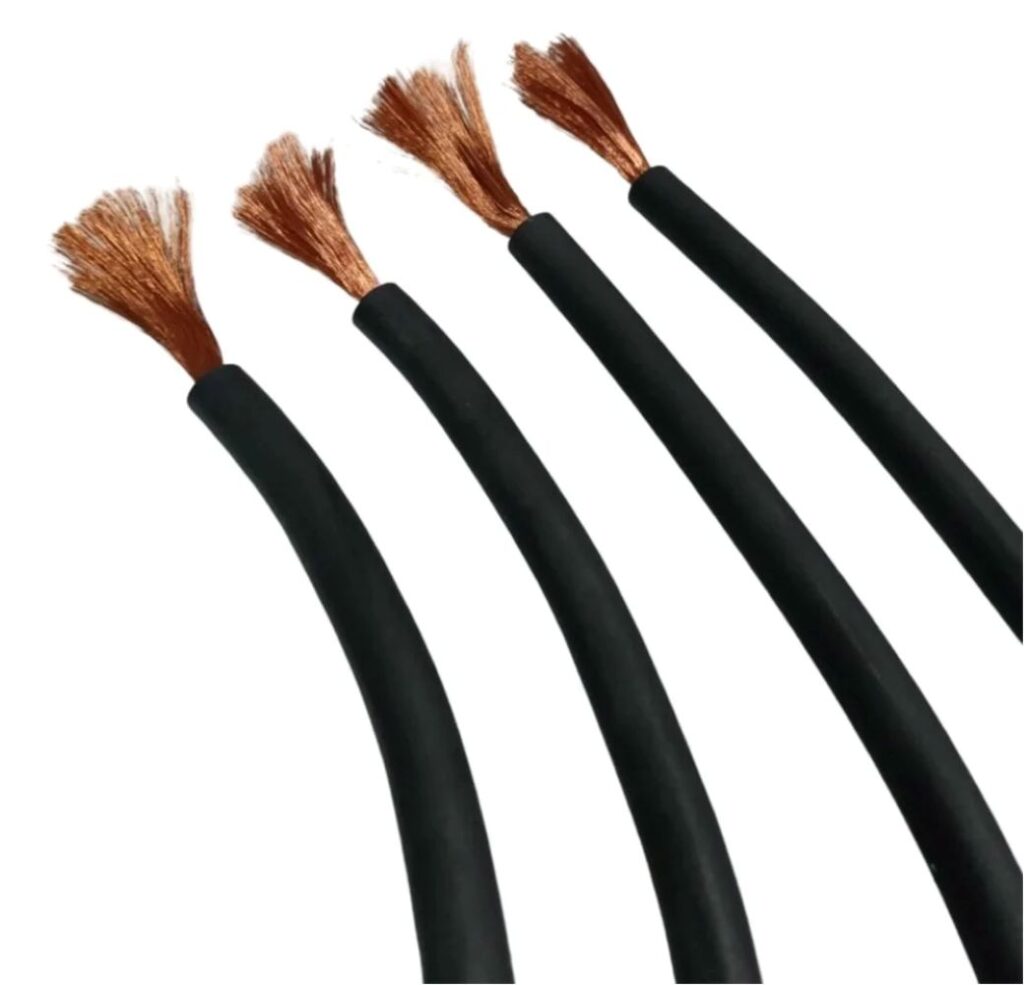
A welding lead cable carries heavy current from the welding machine to the work. Welding leads are made from very fine copper strands, so they stay soft and bendable. They are covered with a tough rubber jacket.
Every welding setup needs two leads. One goes to the electrode holder. The other goes to the work through an earth clamp. Together they complete the electrical circuit.
Types of Welding Cable: Electrode Cable and Earth Cable
Both leads look alike, but each has its own job.
Electrode Holder Cable
The electrode cable connects the machine to the electrode holder. It carries current to the arc. Because welders move it constantly, it must be light and very flexible. A welding electrode lead with a fine-strand copper core handles this best.
Earth Cable for Welding
The earth cable for welding links the work piece to the machine. It is also called the welding earth lead or ground cable. It closes the circuit and keeps the arc stable. Always use the same size for both leads. A thin earth lead can overheat even when the electrode cable is correct.
Key Features of a Good Welding Machine Cable
Not every cable suits arc welding. Look for these qualities:
- Flexible copper welding cable: Fine strands bend easily and resist breaking.
- Rubber welding cable insulation: Neoprene or EPR rubber resists heat, oil, sparks and abrasion.
- Pure copper conductor: A copper welding lead carries current better than aluminium and wastes less heat.
- Heavy duty welding lead jacket: A thick outer layer survives dragging across rough floors.
- Tight, uniform stranding: This improves flexibility and gives a longer life.
Good arc welding cable should also meet IS 9857, the Indian standard for flexible welding cables. Choose a cable with clear size marking on the jacket.
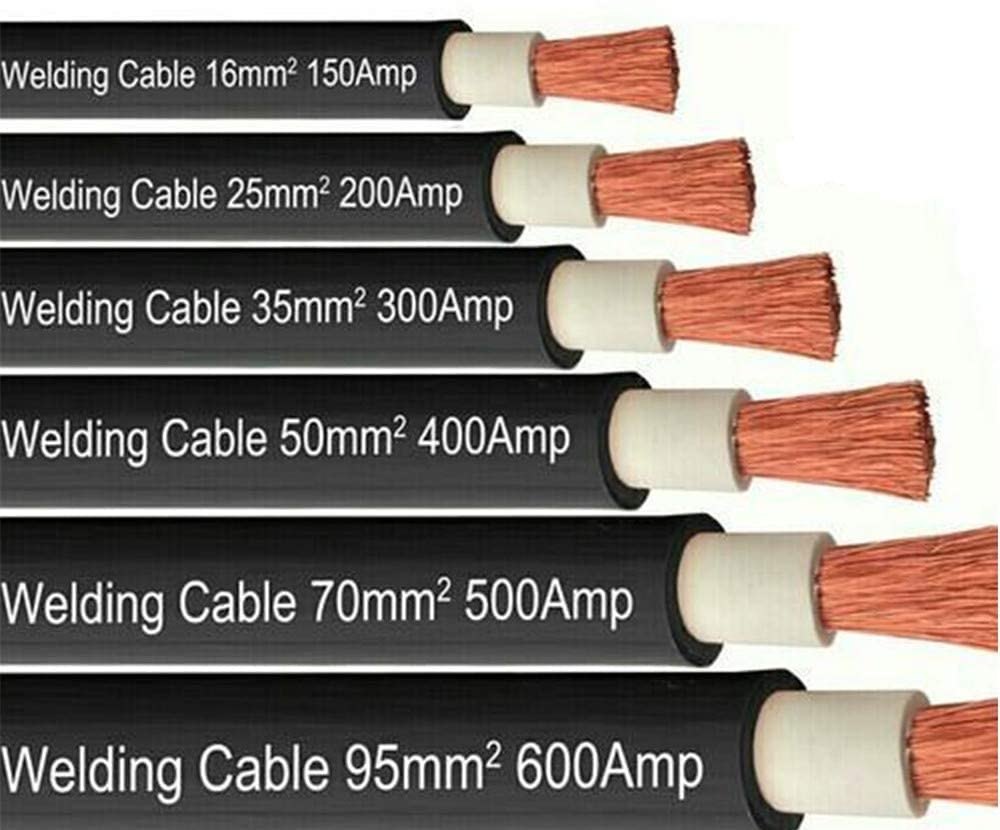
Welding Cable Size Chart with Ampere Rating
Cable size is measured in square millimetres (sq mm). A larger size carries more current. Use this chart as a guide for a copper welding wire at typical duty cycles.
| Cable Size | Approx. Current Capacity | Typical Use |
|---|---|---|
| 10 sq mm | Up to 100 A | Light home and workshop welding, thin electrodes |
| 16 sq mm | 100–150 A | Small fabrication, repair work, 2.5 mm electrodes |
| 25 sq mm | 150–200 A | General workshop welding, 3.15 mm electrodes |
| 35 sq mm | 200–300 A | Fabrication shops, 4 mm electrodes |
| 50 sq mm | 300–400 A | Industrial welding lead for heavy structures |
| 70 sq mm | 400–500 A | Heavy duty welding lead for pipelines and plants |
| 95 sq mm | 500–600 A | High-current industrial and automatic welding |
These figures are approximate. The real rating depends on duty cycle, cable length, ambient heat and the manufacturer. Always check the datasheet for your cable
How to Choose the Right Welding Cable Size
Follow these simple steps.
- Check your machine’s maximum amperage. Pick a cable rated at or above that figure.
- Consider the cable length. Long runs lose voltage. For leads over 15 to 20 metres, move up one size.
- Think about duty cycle. Continuous heavy welding needs a thicker cable than occasional use.
- Match both leads. Use the same size for the electrode lead and the earth lead.
- Check the connectors. Lugs, clamps and holders must suit the cable size. A loose joint creates heat.
Many welders buy a cable roll and cut it to length. This saves money and lets you fit the lead to your workspace. Fit proper lugs after cutting.
Uses of Welding Lead in Industry
These leads are used wherever electric arc welding takes place. Common areas include:
- Fabrication workshops: Gates, grills, frames and furniture.
- Construction sites: Steel beams, columns and reinforcement.
- Shipyards and heavy engineering: Thick plates and large structures.
- Pipeline and boiler work: Long runs that demand a heavy duty welding lead.
- Automobile repair: Body work, chassis repair and exhaust jobs.
- Maintenance teams: Machine repair and plant upkeep.
Light work needs only a small lead. Heavy industrial welding lead cables handle high current for hours without overheating.
Safety and Maintenance Tips for Welding Leads
Good care makes a lead last for years.
- Inspect the cable before each shift. Look for cuts, cracks and bare copper.
- Replace damaged leads at once. Never wrap a cut with tape and keep welding.
- Keep the earth clamp close to the weld area and on clean metal.
- Do not coil the cable tightly while welding. Coils create heat.
- Keep leads away from water, oil, sharp edges and hot metal.
- Do not overload a thin cable. Heat builds quickly and melts the rubber.
- Tighten lugs and connectors often.
- Store cables loosely coiled in a dry place.
Also wear proper PPE, such as welding gloves, a welding helmet and safety shoes.
Where to Buy Welding Cable in Ludhiana
Looking for genuine welding cable in Ludhiana or across Punjab? Spark Welding & Safety Products supplies flexible copper cable, electrode holders, earth clamps, welding machines, consumables and PPE. We help you choose the right size for your machine and your job.
Contact us today for sizes, rates and bulk quotes.
Conclusion
The The right cable improves weld quality, saves power and keeps your team safe. Match the cable size to your ampere rating, use the same size for both leads and choose pure copper with rubber insulation. Inspect your welding leads often and replace them when worn.
Pick a good cable once, and it will serve you for years.
Leave a Reply